
Maintenance · July 16, 2026 · By Doug Kelley, Master Licensed HVAC Technician
Salt Air Is Eating Your HVAC: Protection for Waterfront and Near-Water Homes
Waterfront living on the Chesapeake comes with a tax nobody lists on the settlement sheet: salt-laden air quietly corroding every piece of outdoor metal you own, and your HVAC condenser is the most expensive item on that list. Within a mile or two of open water, in Rock Hall, Betterton, the Kent Island shorelines, Crystal Beach, and along the big rivers, we routinely see outdoor units age at close to double the inland rate. Here is what the salt does and what genuinely slows it.
How salt kills a condenser
The outdoor coil is a lattice of thin aluminum fins bonded to copper tubing, engineered for maximum air contact, which unfortunately also means maximum salt contact. Salt deposits attract moisture and set up continuous corrosion: fins pit and crumble, reducing heat transfer, and the dissimilar-metal joints between fin and tube corrode galvanically until refrigerant leaks open at the coil itself. A coil leak on an aging unit is usually a replacement conversation. Salt also attacks contactor points, fasteners, and cabinet steel, which is why waterfront units look old young.
The habits that genuinely help
- Rinse the outdoor coil with plain water monthly in season, gently, from a garden hose; this alone meaningfully slows deposit buildup
- Keep vegetation trimmed for airflow so the coil dries after fog and spray instead of staying wet
- Skip full-wrap covers in the off season; they trap humid salty air against the metal and make things worse
- Book professional coil cleaning annually; our maintenance visits at coastal homes treat the coil as the patient
The decisions that matter at replacement time
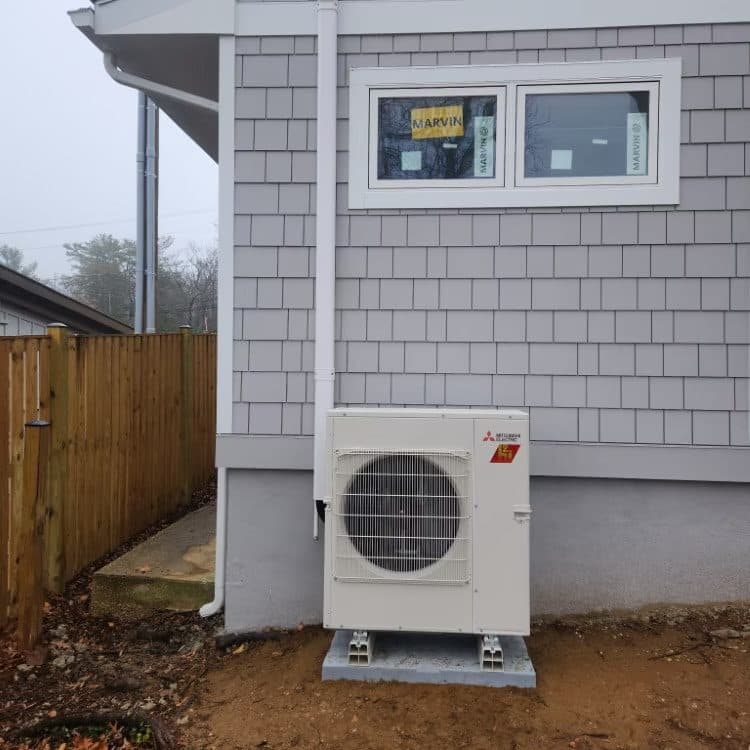
The big protections get chosen on installation day. Coated coils, factory or aftermarket anti-corrosion treatments, are cheap insurance within salt range and we recommend them near water as a default. Siting matters more than people think: placing the unit on the leeward side of the house, out of direct spray-carrying wind, buys real years. Mounting height and drainage keep the cabinet out of standing moisture. And equipment lines built with coastal packages exist for exactly this environment; the cold-climate Mitsubishi unit in this post's photo went in at a shingle-sided cottage with all of this in mind.
Budget honestly, maintain seriously
A protected, rinsed, professionally maintained coastal unit can approach a normal lifespan. An ignored one can need a coil at year seven. If you are near the water, tell us; it changes what we check, what we recommend, and how we spec your next system: (443) 310-0206.