
Heating · August 2, 2026 · By Doug Kelley, Master Licensed HVAC Technician
No Heat? Try These 6 Things Before You Call Anyone
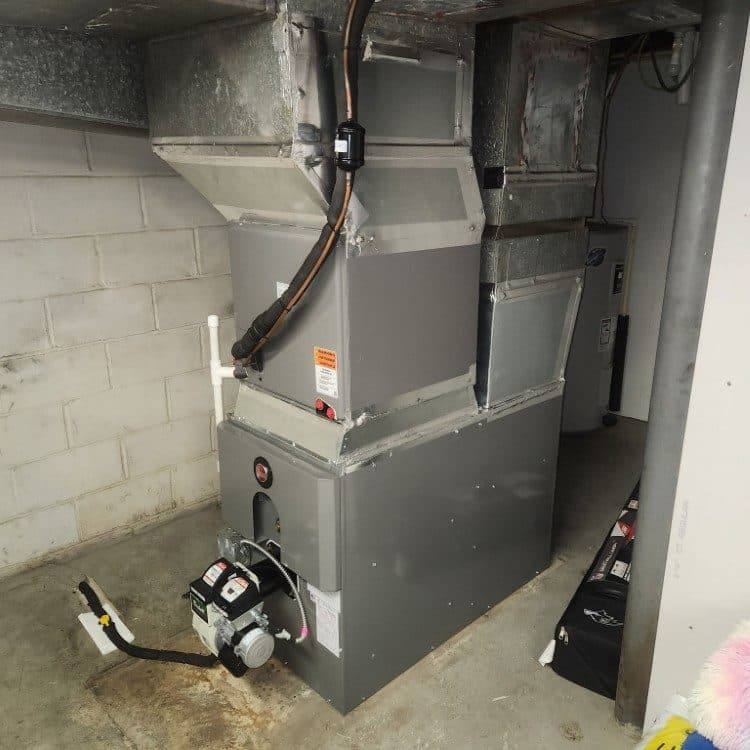
Some of the fastest service calls we run are the ones solved at the thermostat. Before you call anyone about a heating failure, run this list. It takes ten minutes, costs nothing, and even when it does not fix the problem, what you find tells us what to bring.
1. Interrogate the thermostat
Confirm it is set to HEAT with the setpoint a few degrees above room temperature. If the display is blank or dim, replace the batteries; a dying thermostat is a perfect impersonation of a dead furnace. If a schedule or vacation hold is active, override it and see if the system responds.
2. Check the breakers, and the secret switch
Check the panel for a tripped breaker; reset it firmly off then on, once. Then find the switch near the furnace that looks exactly like a light switch: it is the service disconnect, and it gets bumped off by basement traffic, storage boxes, and curious kids constantly. It is embarrassing and it is common and we would rather you find it than pay us to flip it.
3. Change the filter
A suffocated filter overheats a furnace until its safety limit shuts it down; after cooling off it relights, overheats, and locks out again. If your heat runs in short bursts then quits, this is the prime suspect. Put in a fresh filter and give it a try.
4. Verify you have fuel
Propane and oil households: physically check the tank gauge. Empty and near-empty tanks cause a remarkable number of winter calls, and after a propane run-out the system may need a professional restart anyway. Natural gas households: confirm other gas appliances work, which tells you whether supply is the issue.
5. Look for the blinking light
Most gas furnaces have a small window showing a status LED that blinks error codes, with the legend printed on the panel door. You do not need to fix what it says; just note the pattern, two flashes then pause, for example. Telling us the code when you call frequently means we arrive with the right part and finish in one trip.
6. Heat pump owners: read the ice
Frost on the outdoor coil in cold damp weather is normal, and the unit periodically clearing it with a steamy whoosh is the defrost cycle doing its job. A unit entombed in solid ice, or one buried by drifted snow, is not normal: clear snow away gently, never chip ice off the coil, and call. Meanwhile the system's emergency heat setting will keep the house warm at a higher operating cost.
When to skip all of this and act immediately
If you smell gas, do not troubleshoot anything: leave the house, call your gas supplier from outside, and then call us. If a CO detector sounds, get everyone out and call 911. Those are the two scenarios where the checklist does not apply and speed does. For everything else, run the list, then call (443) 310-0206 with what you found.