
Commercial · March 26, 2026 · By Doug Kelley, Master Licensed HVAC Technician
Rooftop Unit Maintenance: A Guide for Business Owners and Property Managers
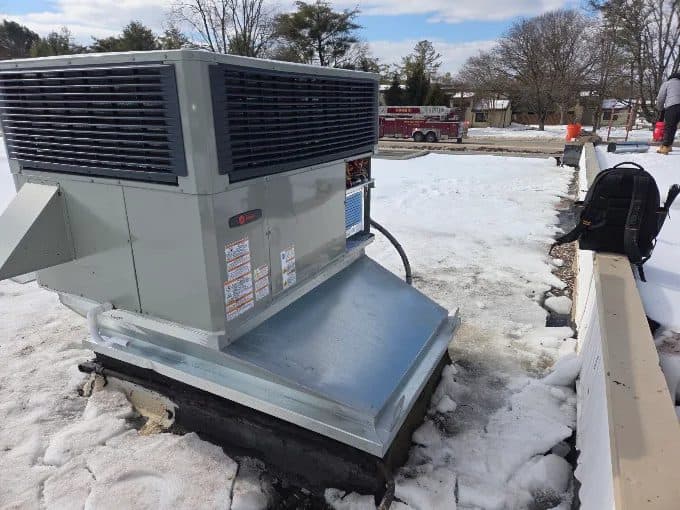
The rooftop package unit is the workhorse of light commercial buildings on the Shore: one box holding the compressor, coils, gas heat, and blower, sitting in full sun, wind, and storm exposure year round. It is also the most neglected equipment in most businesses, purely because nobody walks past it. Out of sight becomes out of service, usually on a busy Saturday.
What fails on RTUs, and why it is preventable
Rooftop failures follow a pattern: belts stretch and snap, condenser coils mat with debris and cook the compressor, contactors pit, economizer dampers seize in whatever position they last held, drain pans rust and overflow, and gas heat sections accumulate the same ignitor and flame sensor problems as any furnace. Nearly all of it telegraphs weeks or months ahead to anyone who looks. A seized economizer alone silently costs many buildings hundreds per month in wasted conditioning without a single comfort complaint.
The planned maintenance rhythm
- Spring: cooling section serviced, coils cleaned, charge verified, belts and bearings checked, drains cleared, before summer load arrives
- Fall: heat exchanger inspected, ignition serviced, gas pressure and combustion verified, before the first cold snap
- Quarterly filter service sized to the space: restaurants and shops breathe far more dirt than offices
- Written condition report after every visit, so replacement is budgeted years ahead instead of discovered in a crisis
The math business owners actually care about
A failed contactor found in April is a routine visit. The same failure on the first ninety degree Saturday is an emergency call plus a dining room of customers who left, and for a restaurant that afternoon can outcost a year of maintenance. Maintained RTUs also commonly reach fifteen to twenty years where neglected ones fail at ten, and on a crane-set commercial replacement, five deferred years is real capital.
For multi-tenant owners and managers
Several property managers use KelAire as their single HVAC contractor across multiple buildings, and the operational reasons are simple: equipment tracked by suite so history follows the machine, one number for tenants' comfort complaints, consistent pricing whether owner or tenant pays, and documentation that arrives without being chased. If your portfolio's HVAC records currently live in a departed manager's memory, that is fixable: (443) 310-0206.